AI accelerates existing workflow mess because it amplifies whatever structures and habits you already have. When teams use different tools and processes for the same job, generative AI does not create efficiency, it multiplies variation, risk and Shadow AI. A readiness baseline is the only way to get reliable performance from AI.
The symptoms of a missing baseline
AI works best in highly structured environments, but most teams are not realistically structured in the way their leaders think they are. When you introduce generative tools into a team that already has multiple ways of completing the same task, you do not get performance. You get variation, tool sprawl and friction.
This is exactly how Shadow AI begins. It happens quietly, without malicious intent, simply because people are trying to get their work done. But in the context of the UK Data Protection Act 2018, informal tool usage can create real exposure, especially when client briefs and third-party IP are involved.
We regularly see teams spend months testing tools like Claude, Copilot or ChatGPT, only to realise the technology is not the bottleneck. You likely have a readiness gap if you recognise these patterns:
- The Tool Sprawl: Different team members are paying for different tools to do the exact same job.
- The Approval Bottleneck: You cannot clearly explain where AI sits in your workflow, or who is responsible for reviewing the final output.
- The Client Risk: Legal or procurement teams are getting nervous because clients are asking for your AI policy, and you do not have one.
What an AI readiness assessment does
Good governance provides clarity rather than restriction, and clear boundaries actually make experimentation safer for your team. This does not sound groundbreaking, but it will save you countless hours and finally give you realistic, defensible ROI proof.
An AI readiness assessment shows you where gaps really are across process, tools, skills and governance. It gives you one shared picture of how AI is being used today, where the risks sit and what needs to change before you scale anything.
The SIGNAL framework
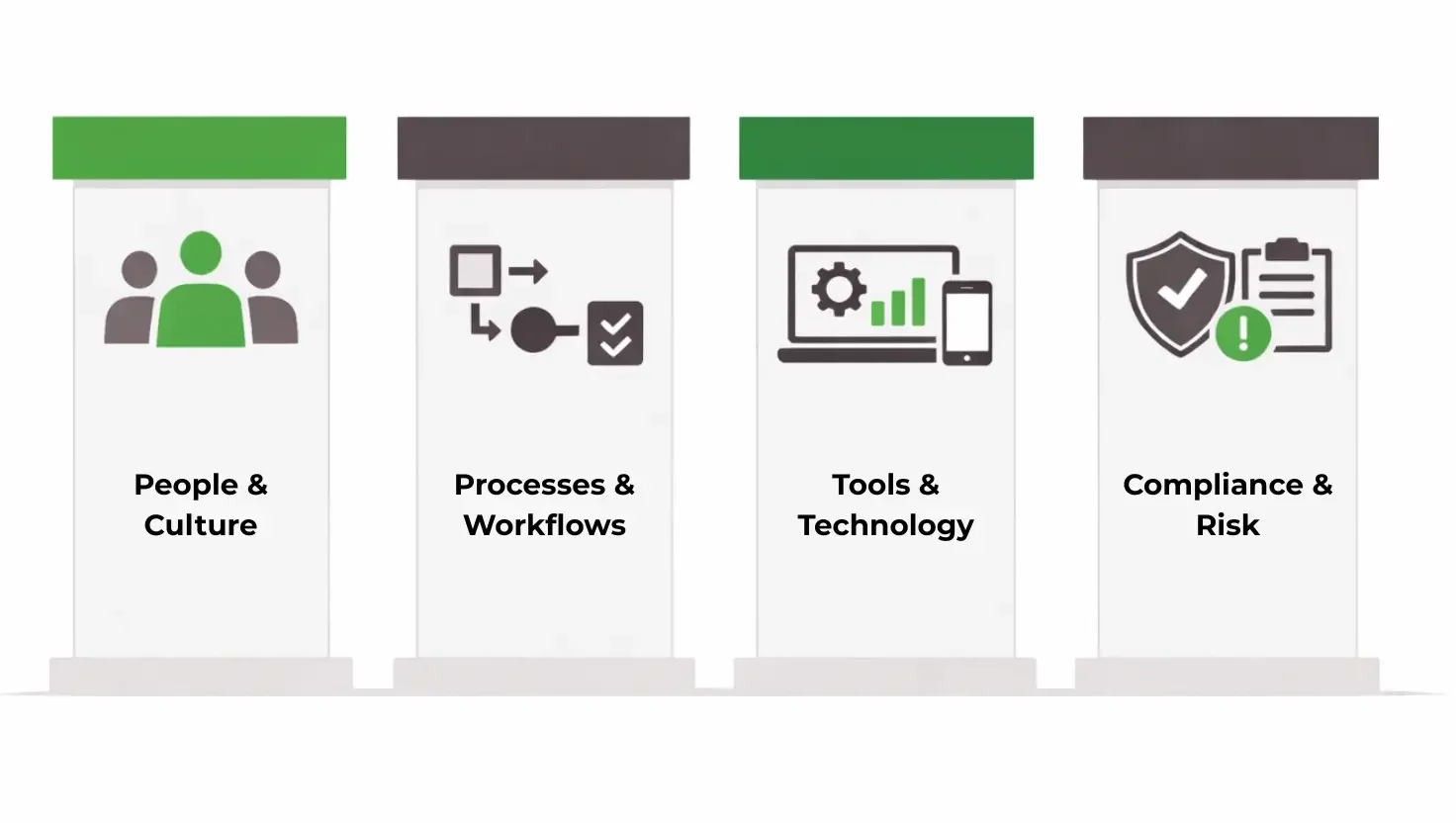
SIGNAL is KINTAL's evidence-led AI adoption diagnostic. It looks across Culture, Workflows, Tools and Governance to identify what is working, where friction or risk is getting in the way and what to prioritise. The output includes prioritised findings, suggested directions and a practical 30/60/90-day implementation pathway.