70% of creative businesses are using AI, yet most of their teams have not received formal training.
AI adoption is outpacing the growth of AI training.
The latest Creative Access Thrive report found that more than 70% of employers surveyed are using AI across administrative, research and creative work.
The majority of workers have received no formal AI training.
This is part of a broader, more challenging reality for the creative workforce. Over four in five respondents reported experiencing financial pressure in the past year, and two-thirds have considered leaving the industry altogether.
These findings bring together two issues often discussed separately: the rapid integration of AI into creative work, and whether people possess the skills, confidence and guidance needed to use it effectively.
Why does the AI training gap matter?
Training people to use AI can't stop at teaching them how to write a prompt.
Someone using an AI tool for research needs to know how to verify the answer. Anyone drafting client work must understand what material can safely be entered. Teams experimenting with image generation need clarity on intellectual property, consent and what must be disclosed.
Everyone also needs to understand who remains accountable when AI has contributed to the work.
That means practical guidance on things such as:
- which tools people can use
- what information must stay out of them
- where human checking is required
- which uses need approval or disclosure
- how intellectual property and client material should be handled
- where to turn when something is unclear
Without that shared understanding, individuals are left to make their own decisions about risk, quality and acceptable use.
Some will be cautious. Others may experiment freely or avoid the tools altogether, simply because they do not know where the boundaries lie.
This makes it difficult for leaders to determine whether AI is being used appropriately, where support is needed, or where risks may be quietly accumulating.
What does wider research say about AI skills?
Creative Access is looking at a particular group of employers and workers. Other research uses different samples and asks different questions, so its figures should not be treated as a single measure of AI adoption across the whole creative economy.
Taken together, however, the direction is clear.
The UK government's AI Adoption Plan for the Creative Industries, published in June 2026, reports that 51% of creative businesses use AI, compared to 33% across the wider economy.
Adoption also varies considerably within the sector. Reported use ranges from 60% in IT, software and computer services to 22% in music, performing and visual arts.
The plan identifies practical AI knowledge, confidence, trusted guidance, skills and workforce transition as areas requiring attention.
Creative UK's research into AI and emerging technology adoption reaches a similar conclusion from qualitative research. Adoption is underway, but organisational capacity and gaps in governance are contributing to uneven progress between organisations.
More recent work from Skills England on AI upskilling broadens the picture beyond the creative industries. Its research found that many organisations are experimenting with AI while structured approaches to workforce capability remain at an early stage.
It also found gaps in clear AI skills frameworks, ethics and governance and leadership support.
The common thread is clear: providing people with access to an AI tool does not automatically equip them with the skills to use it well.
How do you build evidence literacy in AI work?
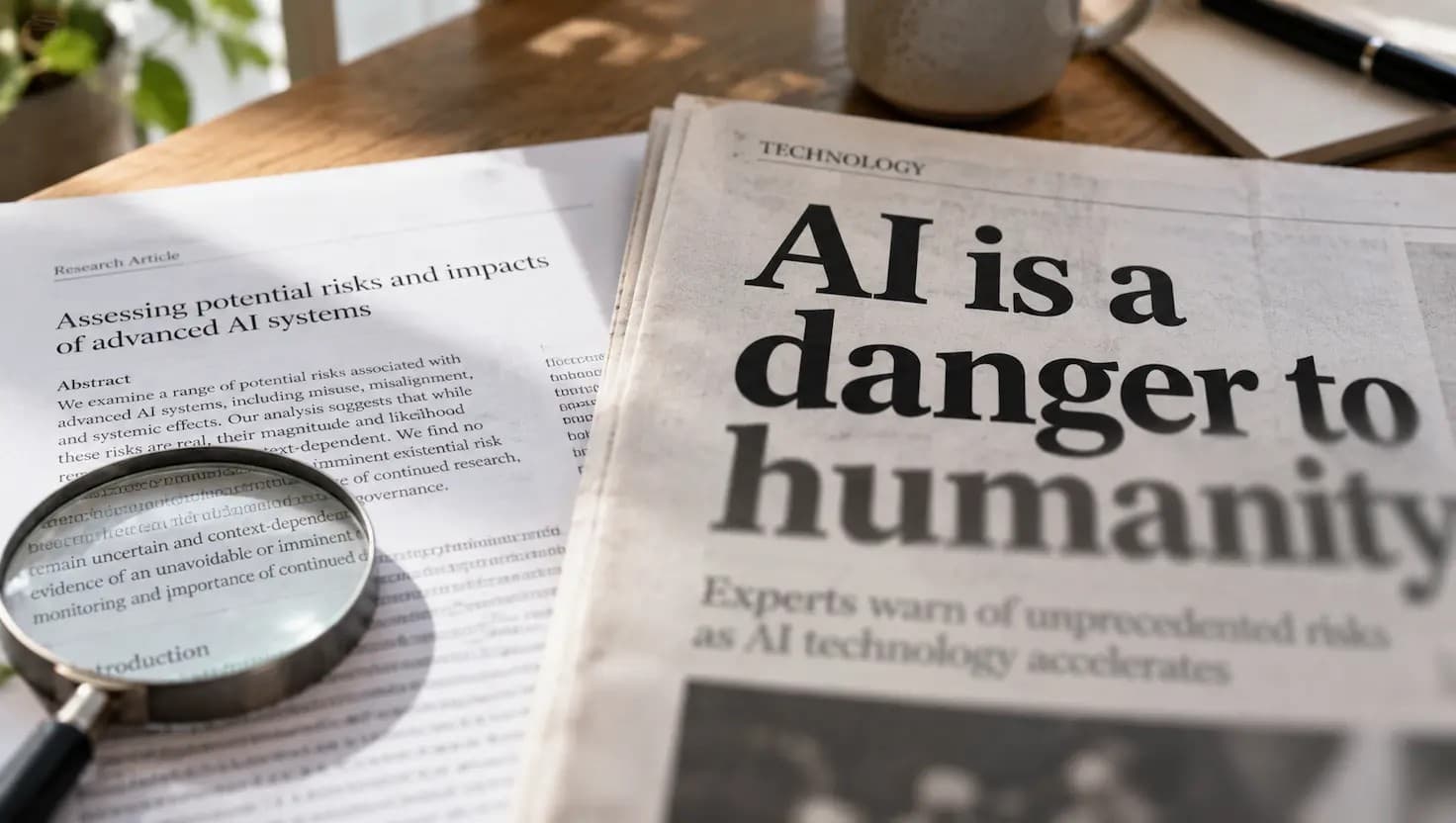
We recently wrote about the gap between an alarming AI headline and the evidence sitting underneath it.
The same principle applies inside organisations.
An AI tool can generate fluent outputs in seconds. However, that reveals little about whether the answer is accurate, if the source is appropriate, or if important context has been lost along the way.
In our 15 September article on assessing claims about AI, we argued for looking closely at what the underlying evidence actually supports.
Teams using AI need that same habit in their everyday work.
Before relying on an AI-assisted piece of work, people should be comfortable asking:
- What is this based on, and can I check it?
- Is it current, complete and appropriate for this use?
- What data, client material or intellectual property must not go into this tool?
- Who is accountable for the final decision or published work?
That is evidence literacy in practice.
It matters whether someone is researching a market, summarising a report, preparing a pitch or generating first-draft creative material.
Producing something with AI can be quick. Knowing when to trust it, when to check it and when to leave it out requires sound judgement.
What's actually blocking better AI adoption?
In our work with creative teams, we regularly see AI use moving ahead of the guidance around it.
People are already trying tools for research, drafting, analysis and administration. Policies, training and clear escalation routes often take longer to catch up.
This shifts where we begin.
Before recommending another tool, we want to know what people are already doing.
Which tools have quietly become part of everyday workflows? What tasks are they being used for? Where is output being checked? What happens when someone is unsure whether a particular use is permitted?
Those answers tell you much more about an organisation's real starting point than a list of software licences.
One thing to do this week: run a 30-minute training-gap check
You do not need a lengthy AI strategy exercise to find out where some of the gaps are.
Bring together a small mix of creative, operational and client-facing colleagues and spend 30 minutes answering five questions:
- Which AI tools are people already using, including free personal accounts?
- What work are they using them for, and where does a human check the output?
- What information, client material or intellectual property must never be entered?
- Which uses need approval, disclosure or a conversation with the client?
- What would make people more confident next week: a clear rule, an example, protected practice time or role-specific help?
The aim is a truthful baseline.
You may discover that people need training, or that a policy exists but nobody knows what it says. One team may have already developed an effective checking process that others could adopt.
You may also find AI being used in places leadership did not know about.
All of those findings are useful because they replace assumptions with evidence from the work itself.
What does good AI training look like?
The Thrive findings make the training gap visible. Simply counting how many people have attended an AI course tells you little about whether that gap has truly closed.
A better measure is what people can do afterwards.
Can they choose the right tool? Can they recognise when an output needs to be checked? Do they understand the organisation's boundaries? Can they explain when AI has contributed to client work? Do they know who makes the final call?
Skills England's 2026 research reaches a similar conclusion. Effective AI training connects learning to real tasks and decisions, covers responsible use as well as technical skills and gives people opportunities to practise in the context of their actual work.
This is particularly important in creative organisations, where the same tool can raise very different questions depending on whether it's used to summarise meeting notes, research a pitch, develop an image, or work with client material.
People need enough understanding to make those distinctions themselves, supported by clear rules to rely on when uncertain.
Worried about whether your team has the confidence and support to use AI well?
Take Trust Pulse to see where you stand. It looks at the wider picture, including capability, confidence, leadership, ways of working and governance.
AI use is already part of creative work.
The relevant question now is whether the people doing that work have what they need to use it with sound judgement.